
Footscray Clinical Hub: Designing Healthcare Through Place, Context and Community
Read how Footscray Clinical Hub draws from local character, street life and clinical planning to shape a grounded, carefully scaled architectural response.
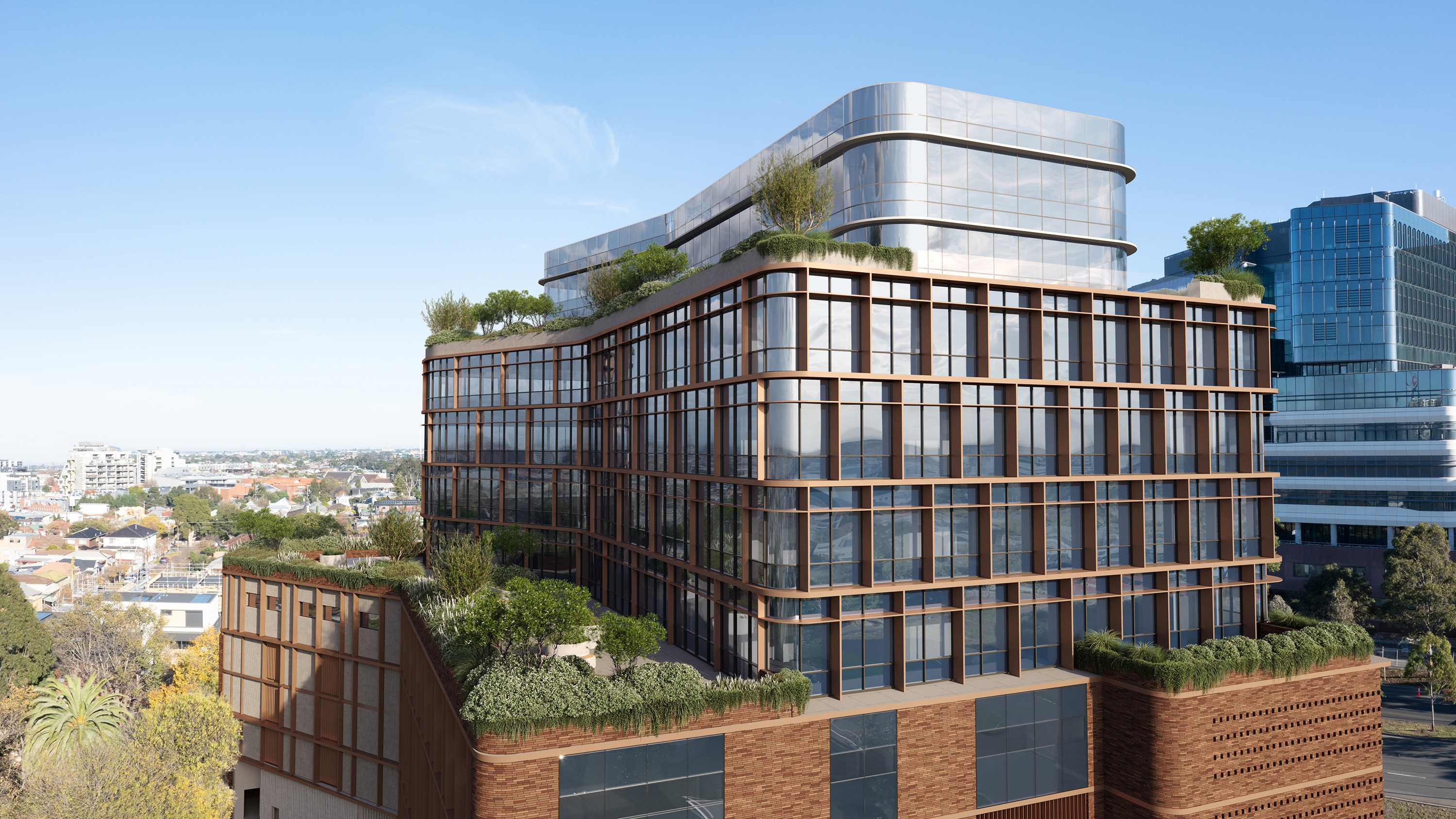
For Footscray Clinical Hub, our design approach began with the surrounding suburb.
Footscray has a strong and varied built character. Its streets carry traces of industry, civic life, retail activity and residential history. Brickwork, shopfront rhythm, solid street edges and layered material detail all contribute to the way the area is experienced.
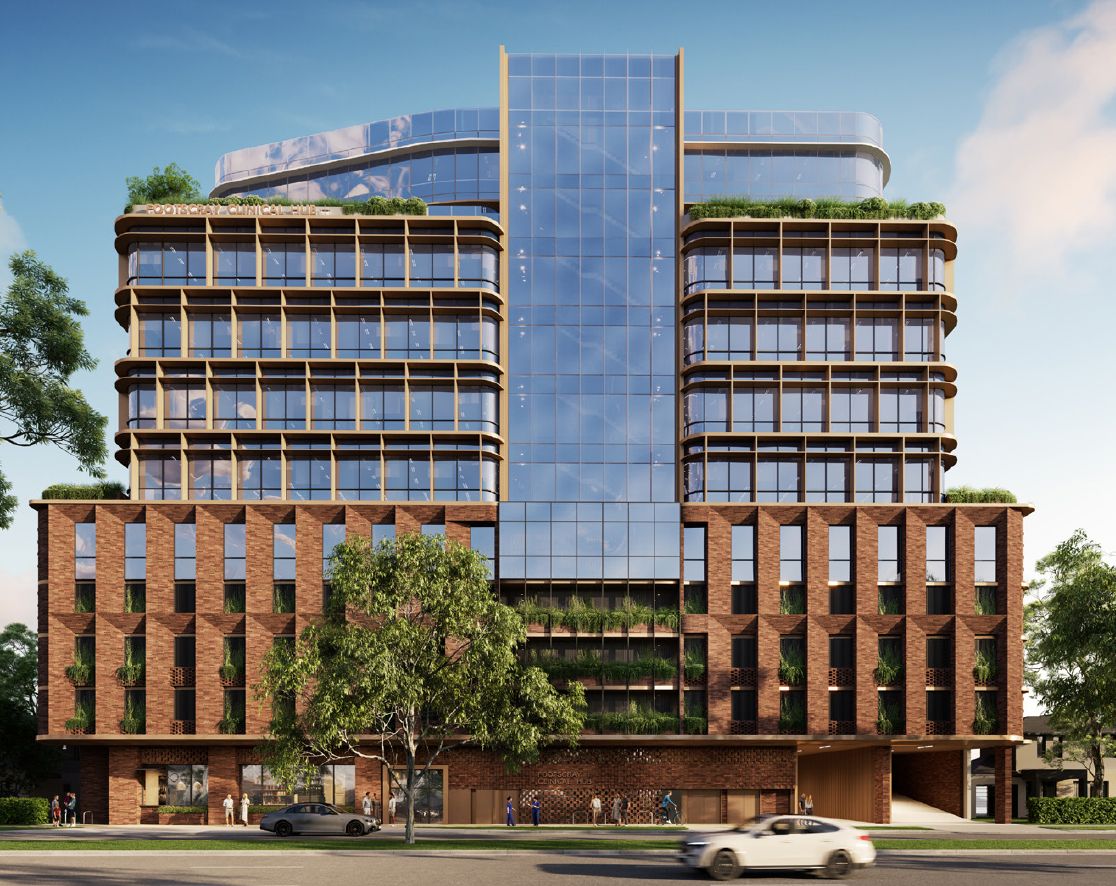
Rather than reproduce these references directly, we looked at how they could inform the building’s scale, expression and relationship to the street. The result is a clear architectural composition made up of three distinct parts: a grounded podium, a middle tower and a lighter upper tower.
The design diagrams support this thinking by showing how the building is shaped from the street upwards. They are not separate ideas, but part of the same process: opening the ground plane, carving the form, setting back upper levels, softening corners, expressing movement and introducing landscape where the building meets the sky.
Starting with Footscray
The design draws from Footscray’s industrial and civic history, including the robust material character of buildings such as Kinnear’s Rope Works, the public presence of Footscray Town Hall and the fine grain of Barkly Street shopfronts.
These references shaped how we considered proportion, rhythm, texture and materiality. The intent was not to create a historic image, but to design a contemporary health building that feels connected to its setting.
This was particularly important for a clinical building of this scale. The facade needed to respond to its functional requirements while avoiding a single, heavy reading. Breaking the building into podium, middle and upper forms allowed each part to have a clear role.
The diagrams describe this process of reduction and refinement. The mass is not treated as one block; it is carved, set back and adjusted to respond to the scale of the site and the surrounding streetscape. This gives the building a clearer relationship to Footscray, rather than allowing its clinical programme to dictate the form alone.

The Design Moves
The diagrams explain how this thinking was tested through the form of the building. They show the project not as a fixed object, but as a series of decisions about street activation, massing, setback, movement, scale and landscape.
At ground level, the building opens towards Geelong Road through the entry, cafe, waiting areas and pedestrian connections. This supports a more active public edge and gives the clinical hub a stronger relationship with the street.
As the building rises, the mass is carved and set back to reduce visual weight. Corners are softened, the stair is expressed, and the upper levels step away to create a more measured transition in scale. Landscape is then used across the upper levels to soften the built form and bring a calmer quality to the building.
These moves are not separate design gestures. They support the same idea: a building that is grounded at street level, ordered through its clinical middle levels and lighter towards the skyline.
%20(1).gif)
A Grounded Podium
The podium is the most tactile part of the building. It establishes a strong street presence and creates a human scale at the ground plane.
Brickwork is used here for its weight, texture and familiarity within the Footscray context. Through fine detailing and articulation, the podium gives the lower levels depth and variation, helping the building meet the street in a more direct and grounded way.
The ground plane also supports a more active public edge. The entry, cafe and waiting areas are positioned to create openness along the frontage and improve the relationship between the building and Geelong Road.
This is where the idea of an active ground plane becomes important. The building is not intended to turn away from the street. It uses arrival, waiting, movement and street-facing activity to create a more open edge for patients, visitors, staff and the wider community.
The stair along the front of the building adds movement to the facade and allows internal activity to be seen from the street. This helps the building feel occupied and connected, rather than closed off from its surroundings.
Middle Levels and Upper Form
The middle section accommodates clinical and ward spaces. Here, the facade is more ordered and refined, with fenestration carefully considered to support internal function while maximising views out to Geelong Road, Footscray Park and the Melbourne CBD skyline.
The rhythm and proportions of this section respond to the surrounding heritage precinct and streetscape. The vertical expression picks up on the fine grain of local shopfronts, while horizontal banding gives the building structure and assists with passive shading.
At the upper levels, the building becomes lighter and more recessed. This reduces the perceived bulk of the development and creates a more measured transition to the skyline.
The softened corners, setbacks and scale transitions all contribute to this reading. They help the building step between the scale of the street and the larger built form above, rather than presenting a hard edge on all sides.
Planter boxes across the upper levels introduce greenery and soften the building’s appearance. This helps the upper form sit more lightly, while also contributing to a calmer setting for patients, staff and visitors.
The design of Footscray Clinical Hub is therefore not based on surface treatment alone. It comes from reading the local context, understanding the building’s clinical needs, and shaping the form so it feels grounded, ordered and appropriate to Footscray.


